

The project proposes the transformation of the former auditorium of the Museo Reina Sofía into a new space for audiovisual formats. To achieve this, in addition to giving a new character to this emblematic museum space, it is necessary to modify both the entrance and the seating area, as well as intervene in the materiality of the hall to improve its acoustic performance and install a new image and sound system.
The Museo Nacional Centro de Arte Reina Sofía is located in the building of the former General Hospital of Madrid, an 18th-century construction designed by José de Hermosilla and Francisco Sabatini. After several interventions, and following its designation as a Cultural Heritage Site with the status of Monument, it was inaugurated as a museum in 1992 and expanded in 2005, and it is currently one of the leading centers for modern and contemporary art in Europe.
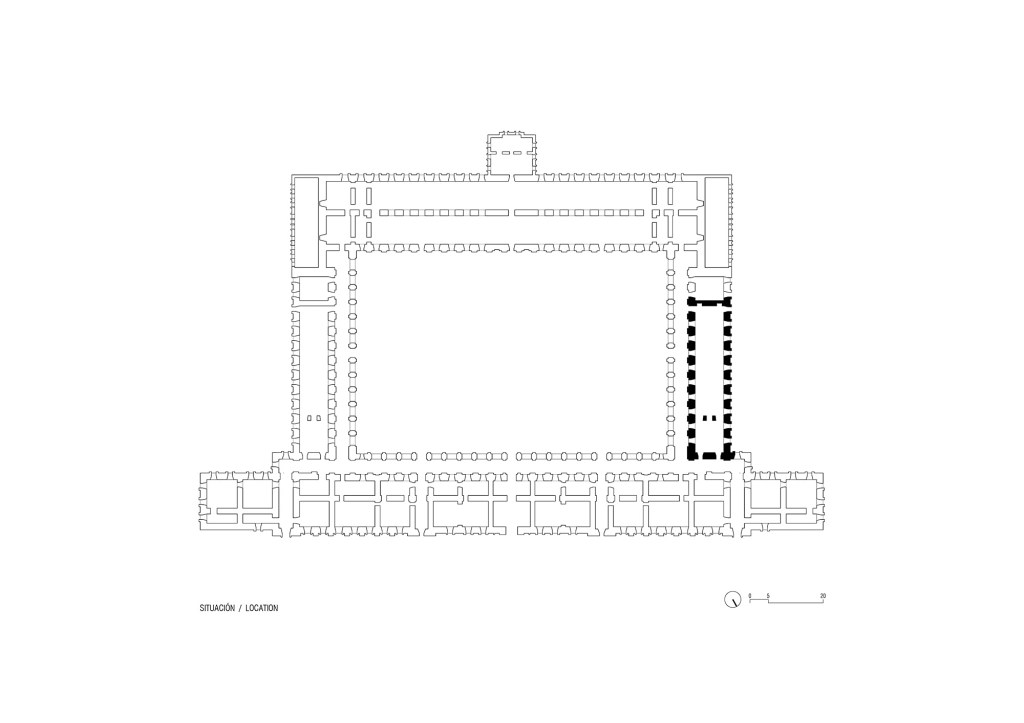
The building of the former hospital, known as the Sabatini building, included an auditorium built in 1987 by Jaume Bach and Gabriel Mora, which served all of the museum’s conferences and events. With the expansion of the center, the institution gained two new auditoriums, which allowed the existing one to be converted into a cinema and auditorium.
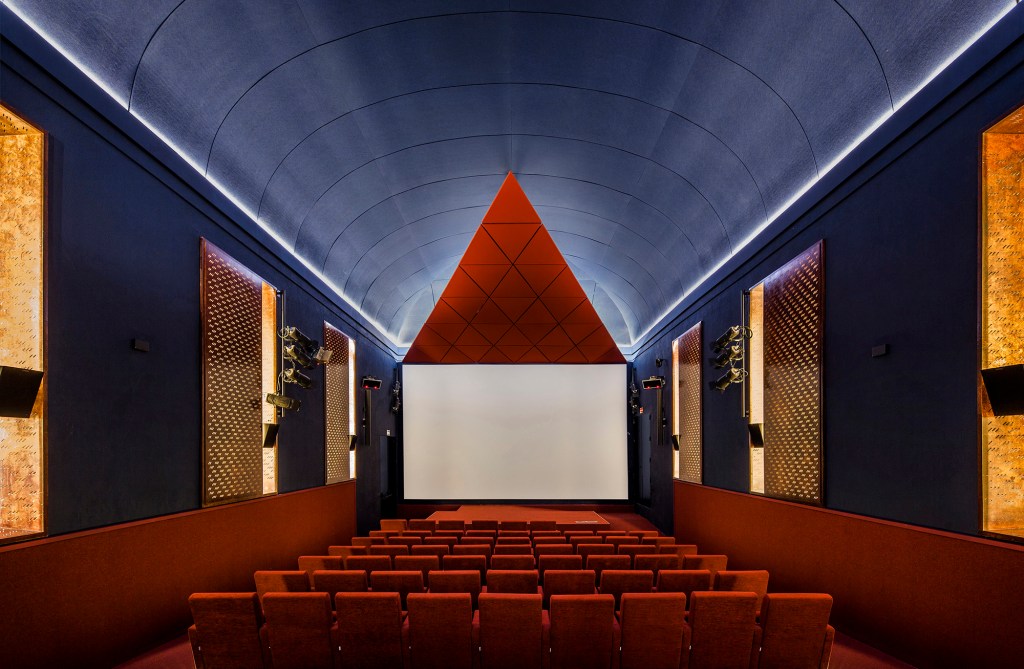
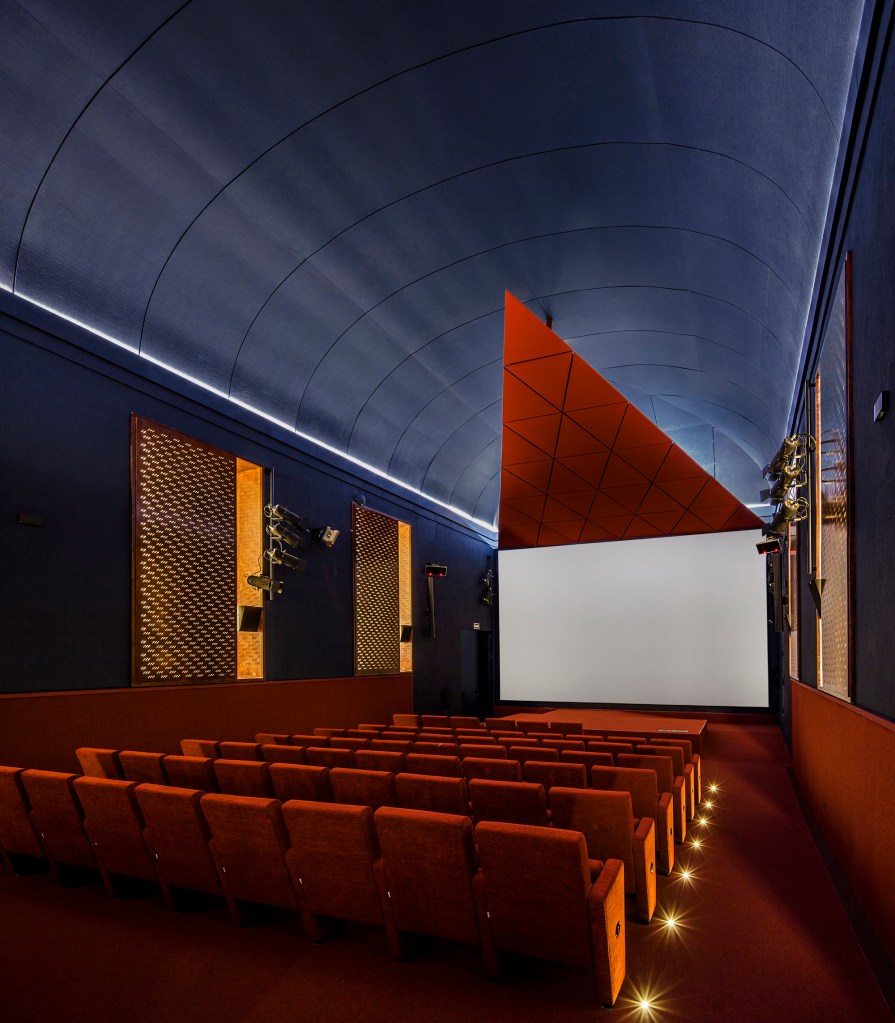
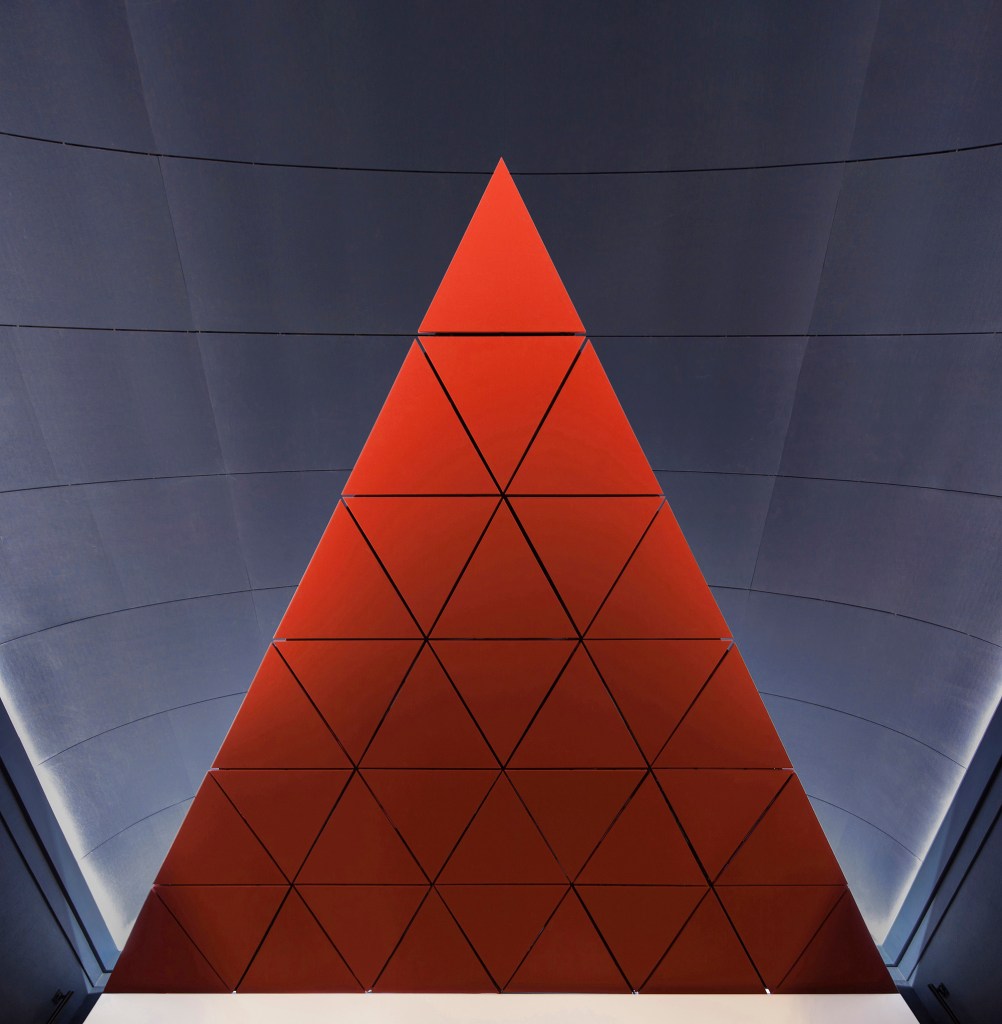
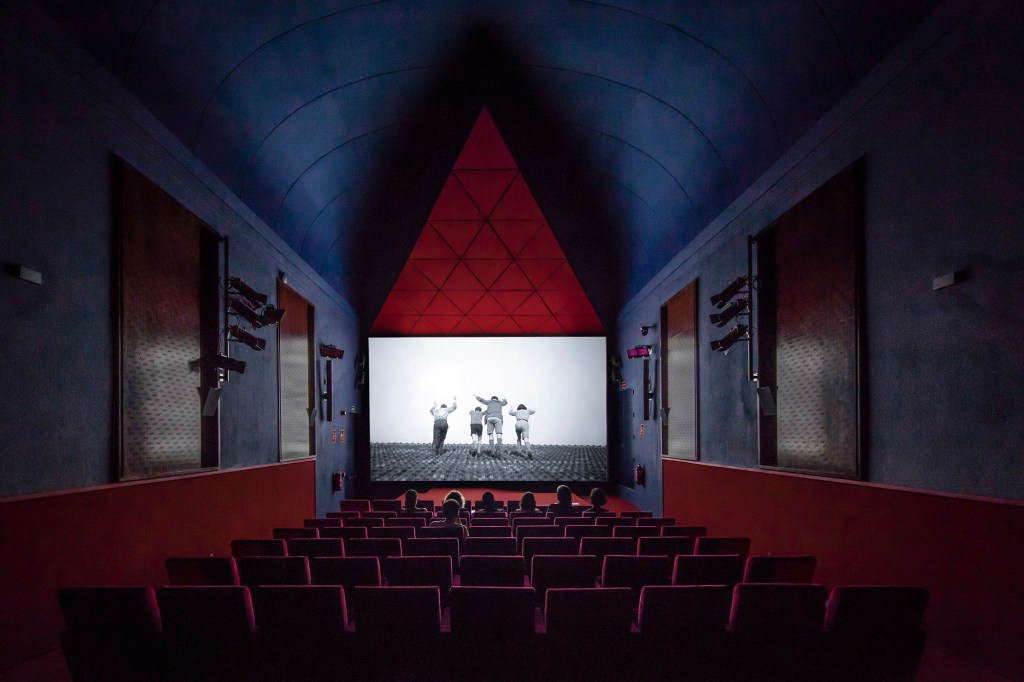
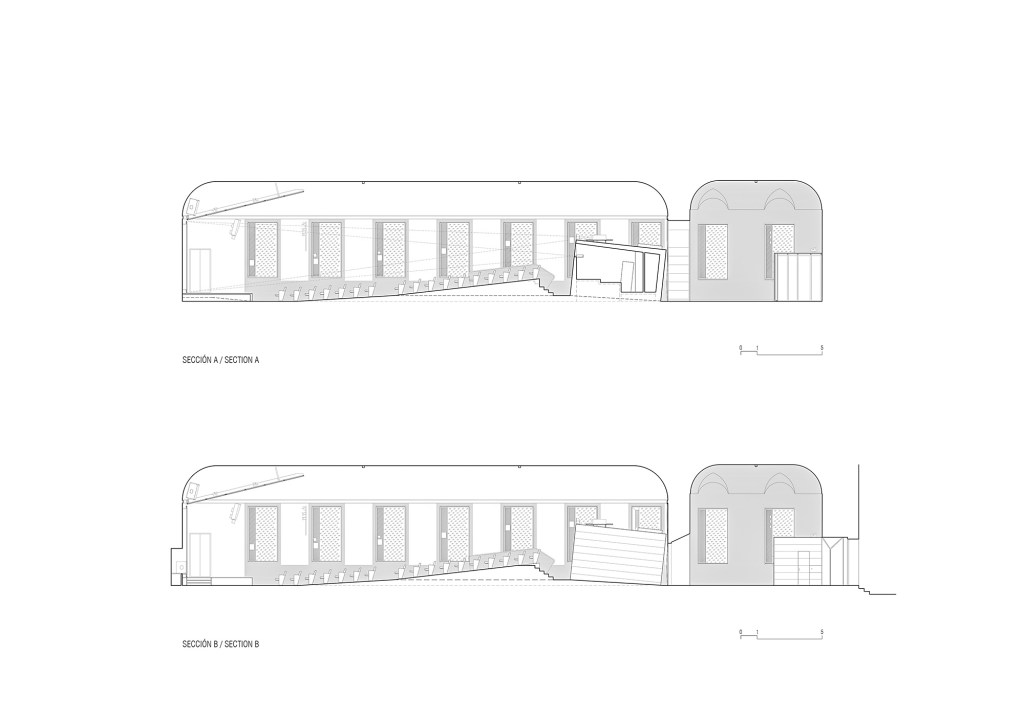
The proposal seeks to preserve the iconic elements of Bach and Mora’s project: the triangular projection room that organizes and divides circulation at the entrance, and the triangle suspended above the stage, which functioned as a reverberation device. In contrast, the existing translation booths are removed, as current technology does not require a dedicated space; the seating area is modified to increase its slope and improve visibility of the screen, and the emblematic suspended triangle is transformed into a large acoustic screen that conceals the central speakers.
With this strategy, the aim is to adapt the hall’s conditions to its new use while maintaining the character of “geometric objects” arranged under a large vaulted space, as envisioned in the original project: a starry sky under which different events were organized.
The old hospital windows were closed with wooden panels featuring carved motifs evoking raindrops, subtly generating the feeling of being outdoors. The project reinforces this idea by establishing blue as the color of the vault (the night sky) and reclaiming the classic red of many cinemas and theaters throughout architectural history, with a special reference to Erik Gunnar Asplund’s Skandia Cinema in Stockholm and the Cine Doré in Madrid.
The blue of the sky and the red of the carpet recall classical theaters, establishing a link between the function of the space (which requires dark colors to avoid reflections) and the tradition of cinema and theater, especially since it is located in a neoclassical building. To mediate between these two tones, the absorbent surfaces placed in the window niches become points of soft lighting, highlighting these openings and turning them into outdoor-like volumes, enhancing the sensation of being outside.
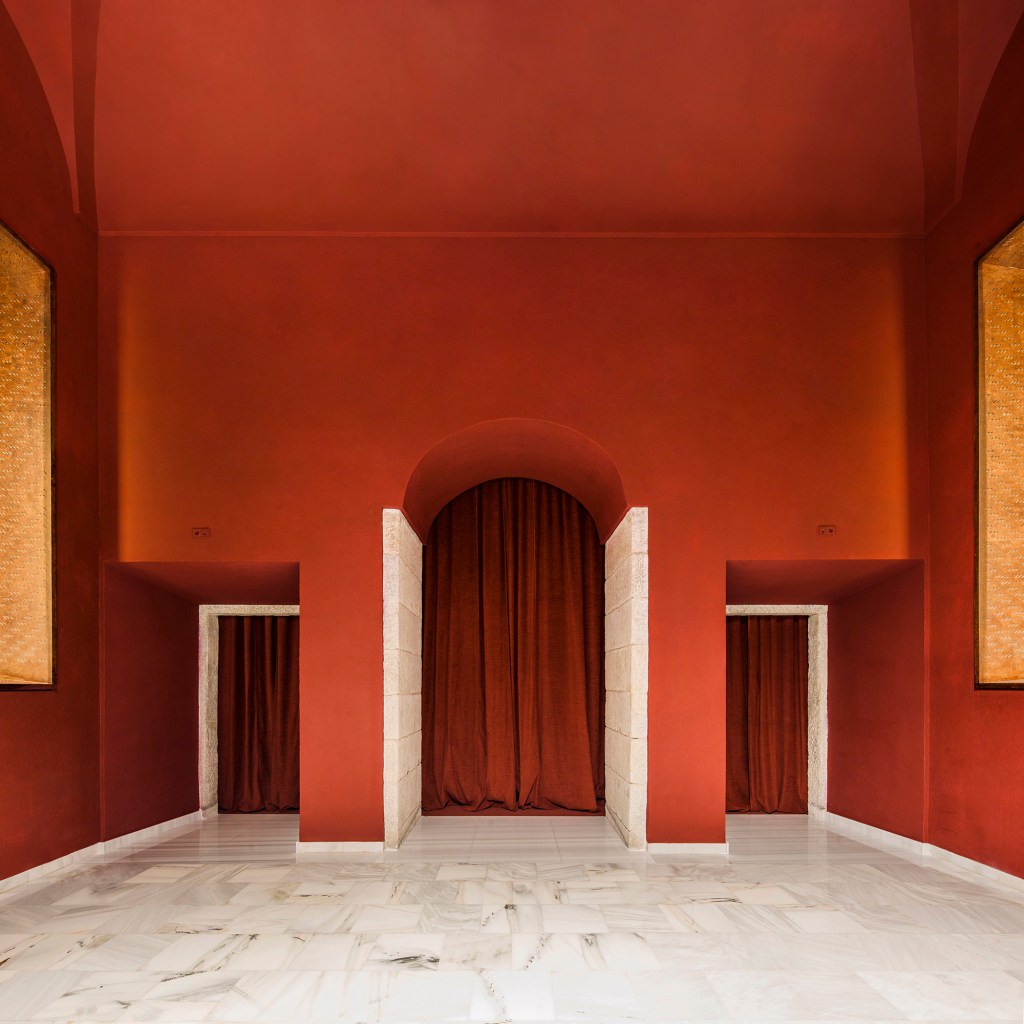
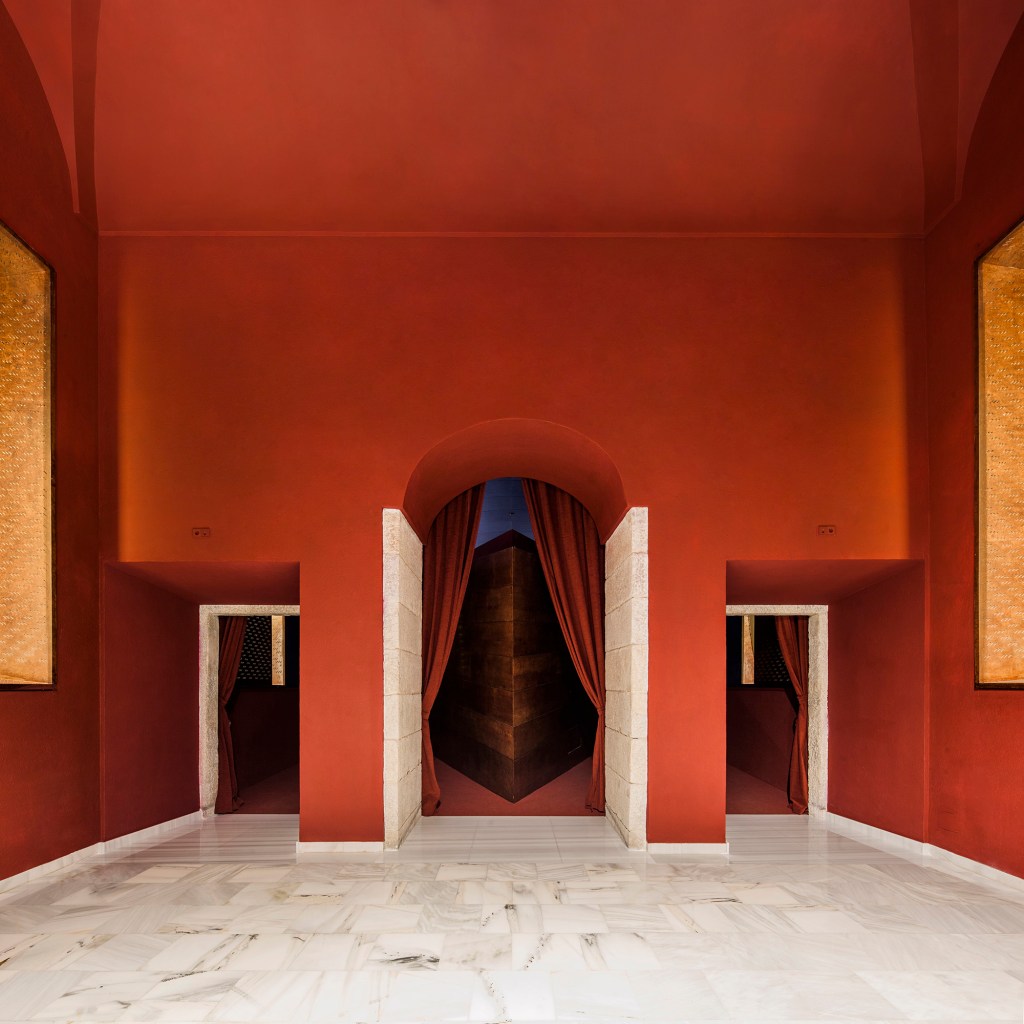
In the entrance lobby, a new element is added: a triangular storage unit that dialogues with the geometry of the projection booth helps guide circulation toward the back of the hall. The existing serliana is preserved, and by unifying all surfaces in a single red tone, it appears as a distintive element that welcomes visitors and reveals the new hall behind dense velvet curtains, evoking wide cinematic universes ranging from Luis Buñuel to David Lynch, from Pedro Almodóvar to Aki Kaurismäki.









El proyecto plantea la transformación del antiguo auditorio del Museo Reina Sofía en una nueva sala para formatos audiovisuales. Para ello, además de dar un nuevo carácter a este espacio emblemático del museo, es preciso modificar tanto el acceso como la platea, así como intervenir en la materialidad de la sala para mejorar el comportamiento acústico e instalar un nuevo sistema de imagen y sonido.
El Museo Nacional Centro de Arte Reina Sofía está ubicado en el edificio del antiguo Hospital General de Madrid, una construcción del siglo XVIII obra de José de Hermosilla y Francisco Sabatini. Tras varias intervenciones, y después de ser catalogado como Bien de Interés Cultural con la categoría de Monumento, fue inaugurado como museo en 1992 y ampliado en 2005, siendo actualmente uno de los centros de referencia del arte moderno y contemporáneo en Europa.
El edificio del antiguo hospital, conocido como edificio Sabatini, contaba con un auditorio realizado en 1987, obra de Jaume Bach y Gabriel Mora, que daba servicio a todas las conferencias y actos del museo. Con la ampliación del centro, la institución pasó a disponer de dos nuevos auditorios, lo que permitió reconvertir el existente en sala de cine y auditorio.
La propuesta busca conservar las piezas icónicas del proyecto de Bach y Mora: la sala de proyección triangular que organiza y divide la circulación en la entrada, y el triángulo suspendido sobre el escenario que cumplía funciones de reverberación. En cambio, las cabinas de traducción existentes se eliminan, ya que la tecnología actual no requiere un espacio específico, la platea se modifica para ganar mayor inclinación y mejorar la visibilidad de la pantalla y el emblemático triángulo suspendido se convierte en una gran pantalla acústica que esconde los altavoces centrales.
Con esta estrategia, se pretende adaptar las condiciones de la sala a su nuevo uso y, al mismo tiempo, mantener el carácter de “objetos geométricos” dispuestos bajo un gran espacio abovedado, tal como concebía el proyecto original: un cielo estrellado bajo el cual se organizaban los distintos eventos.
Las antiguas ventanas del hospital estaban cerradas con paneles de madera con motivos fresados que evocaban gotas de lluvia, generando de forma velada la sensación de estar en el exterior. El proyecto refuerza esta idea estableciendo el azul como color de la bóveda (el cielo nocturno) y recupera el rojo clásico de tantos cines y teatros a lo largo de la historia de la arquitectura, con especial relación con el Cine Skandia de Erik Gunnar Asplund en Estocolmo y el Cine Doré en Madrid.
El azul del cielo y el rojo de la moqueta remiten a los teatros clásicos, estableciendo un vínculo entre la función del espacio (que requiere colores oscuros que eviten reflejos) y la tradición del cine y la teatral, especialmente al estar ubicado en un edificio neoclásico. Para mediar entre estos dos tonos, las superficies absorbentes situadas en los nichos de las ventanas se convierten en los puntos de una iluminación tenue, que resalta estas aberturas y las convierte en unos volúmenes al aire libre ampliando la sensación de estar en el exterior.
En el vestíbulo de entrada se añade un nuevo elemento: un almacén también triangular que dialoga con la geometría de la cabina de proyección y que, al igual que esta, ayuda a dirigir la circulación hacia el fondo de la sala. La serliana existente se conserva y, al unificar todas las superficies en un único tono rojo, aparece como una pieza singular que recibe al visitante y revela la nueva sala tras densas cortinas de terciopelo que remiten a universos cinematográficos amplios que van desde Luis Buñuel a David Lynch, de Pedro Almodóvar a Aki Kaurismäki.
| Architects: | BACH / Jaume Bach, Anna & Eugeni Bach |
| Collaborators: | Roger Molas, Silvia Ripoll, Evangelos Evangelou (architects Bach). Provitec, Juan Manuel Martín (sound and image engineering), PRC Ingeniería, Pere Ramis (engineering), BetArq, Helena Roca (quantity surveyor) Tecnics G3, Victor Martín (Construction management) Segipsa, Rubén Rodríguez (Project Management) |
| Completion date: | 2025 |
| Built surface: | 520 m2 |
| Promoter: | Museo Nacional Centro de Arte Reina Sofía |
| Constructor: | Elecnor |
| Address: | MNCARS / c. Santa Isabel, 52. 28012 Madrid, España |
| Photographs: | Eugeni Bach |
 Anna & Eugeni Bach